ISM research focuses on the mechanical, physiological, neurological, psychological and sociological determinants of motor skills in living beings.
ISM (Institute of Movement Sciences Etienne-Jules Marey) is a joint Research unit of Aix-Marseille University (AMU) and CNRS. The laboratory is located on several sites: Sports Sciences Faculty on the Luminy campus, Sainte-Marguerite Hospital, Timone Medecine Faculty and the Aix-Marseille Institute of Technology (IUT) site.
The laboratory employs around 150 people (researchers, teacher-researchers, IT/BIATSS and PhD students).
The size of the Institute of Movement Sciences, the range of disciplines covered by its researchers, and its unique research focus place it in a very special position, on a national and international rank.
The Institute of Movement Sciences is structured around 3 research teams:

Address: UMR 7287 CNRS & AMU
Faculty of Sports Science, CP910
163, av. de Luminy
F-13288 - Marseille Cedex 9, France
Telephone: +33 (0)4 13 94 59 21
Mail: ism-com@univ-amu.fr
Focus on AI/Health research teams
Three ISM research teams work closely with the Laënnec Institute on research related to the application of artificial intelligence to healthcare.
Artificial intelligence-related work by ISM's BMI, Dynamics and SBi teams:
(texts and illustrations provided by Gaëtan Perrotte, Jean-Louis Vercher and Jean-Jacques Temprado)
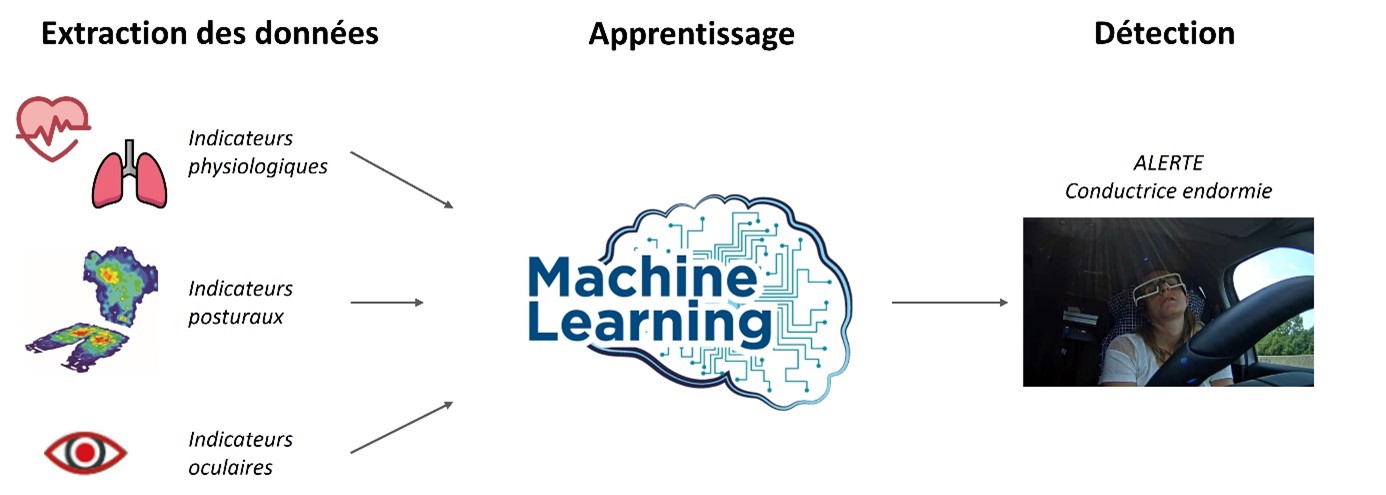
At the Institute of Movement Sciences, and in partnership with Stellantis, research is being carried out to detect degraded states of driving. More specifically, some of this research focuses on the detection of drowsiness at the wheel in partially autonomous driving, using postural and physiological indicators. Using artificial intelligence algorithms, the aim is to obtain a robust and reliable multi-class detection of drowsiness, so as to be able to issue a warning signal.
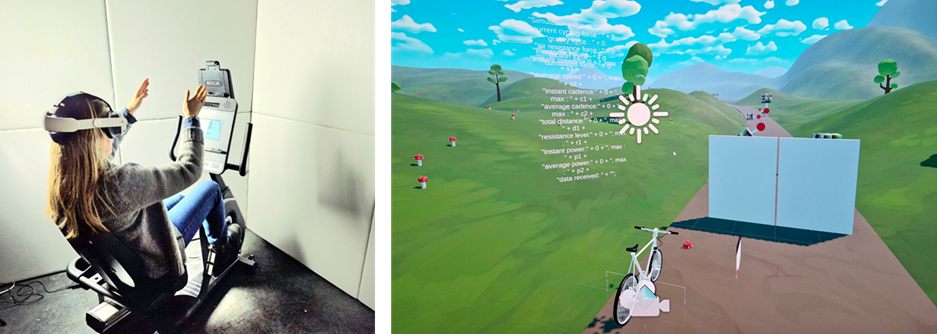
Artificial intelligence (AI) is set to play a crucial role in the design of exergames dedicated to seniors. As part of the Silver Explorer active video game project, developed by the Active Aging Chair at ISM with the CRVM, the opportunities offered by AI will be used to implement innovative functionalities by :
- Personalizing training according to individual abilities.
- Adjusting difficulty in real time to maintain motivation.
- Continuously assessing cognitive abilities and providing recommendations.
Thanks to AI we aim to transform exergames into tailor-made training tools that support the physical and mental well-being of seniors.
The laboratory in pictures
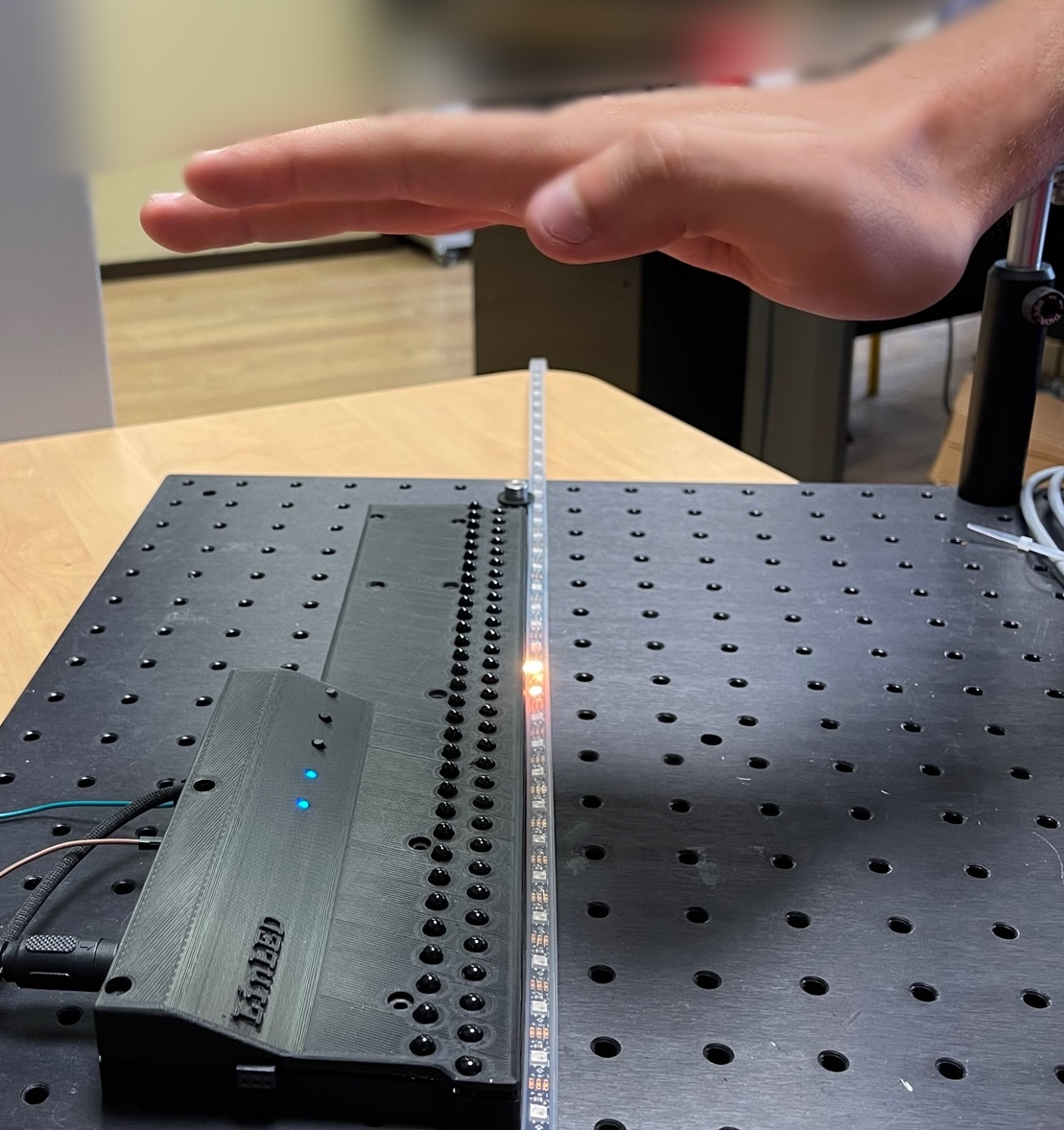
LinLED optical interface developed at ISM for hand localization and gesture recognition using machine learning:
AI for diagnosis, prevention, repair and performance: